
Whiplash Injuries After a California Car Accident: What You Need to Know in 2025
 October 24, 2025
- Categories: Car Accidents
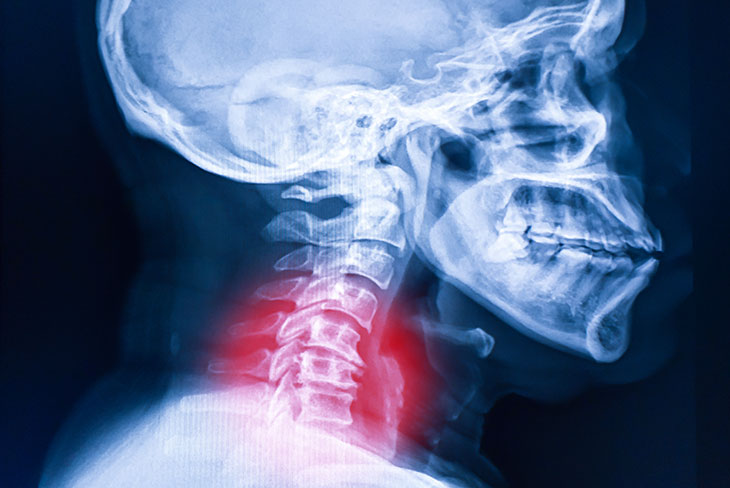
A whiplash injury from a California car accident is a soft tissue injury to the neck, caused by a rapid, forceful back-and-forth movement.
The landscape for these claims has changed. New state laws have increased the minimum required auto insurance liability limits, meaning more potential coverage may be available for your medical bills and other losses.
However, securing fair compensation remains challenging. Insurance companies frequently question the severity of whiplash because it doesn’t appear on an X-ray, and symptoms are delayed. Proving your injury requires consistent medical documentation and a clear understanding of the claims process.
If you have a question about the pain you’re feeling after a car crash, call us at (888) 407-2955. The initial consultation is always free.
What Exactly Is Whiplash, and Why Does It Feel Worse Days Later?
What Is Happening in Your Neck?
When another car hits yours, especially from behind, your head snaps back and then forward with incredible force. This motion stretches and tears the soft tissues, commonly known as the muscles and ligaments, in your neck. Think of it like a rubber band being stretched too far, too fast. Those tissues are not designed for that kind of abrupt movement, and the resulting damage is what we call whiplash.
Why Are the Symptoms So Delayed?
Immediately after a traumatic event like a car crash, your body releases a flood of adrenaline and endorphins. These hormones are a natural defense mechanism, as they mask pain and give you the energy to handle the immediate situation. You might be focused on exchanging insurance information and talking to the police, not realizing that an injury has occurred.
Once you are home and the initial shock wears off, that hormonal protection fades. Over the next 24 to 72 hours, inflammation begins to set in as your body starts its healing process. This inflammation is what causes the pain, stiffness, and reduced range of motion to flare up.
What Symptoms Should You Be Looking For?
While neck pain is the hallmark of whiplash, the injury causes a wide range of symptoms that you might not immediately connect to the accident.
The Obvious Signs:
- Neck pain and stiffness
- Headaches, typically starting at the base of the skull
- Pain that radiates to the shoulders, upper back, or arms
The Less Obvious Signs People Ignore:
- Dizziness or vertigo
- Blurred vision
- Ringing in the ears (tinnitus)
- Fatigue and difficulty sleeping
- Memory or concentration problems
Changes in California Law That Directly Affect Your Whiplash Claim in 2025
Higher Insurance Minimums Mean More Potential Coverage (SB 1107)
As of January 1, 2025, California law under Senate Bill 1107 increased the minimum amount of liability insurance every driver must carry. For decades, the mandatory minimums were not enough to cover the costs of even moderate injuries.
The old limits were $15,000 per person and $30,000 per accident for bodily injury. The new limits are now $30,000 per person and $60,000 per accident.
What this means for you: If the at-fault driver has a minimum policy, there is now double the amount of potential insurance money available to cover your medical treatment, lost income, and pain. This is significant for injuries like whiplash, where physical therapy and other treatments last for months, and costs quickly burn through the old, lower limit.
What if Your Accident Happened While You Were Working?
California also increased the maximum weekly benefits for Temporary Total Disability in 2025. If you were driving for your job, perhaps making a delivery, visiting a client, or running an errand for your employer, you may have a workers’ compensation claim in addition to a personal injury claim. For 2025, the maximum temporary disability rate has increased to $1,680.29 per week. This provides a steady source of income to help cover your lost wages while you recover.
Why You Must Take These Claims Seriously from Day One
Because whiplash is an “invisible injury”, one that doesn’t show up on an X-ray, it is one of the most frequently challenged claims. The insurance company for the at-fault driver is a business, which means it must balance paying claims with protecting its financial interests. Their investigation will look for any reason to argue that your claim is worth less than you believe.
Common Arguments Used to Minimize Whiplash Claims:
- “It was just a minor, low-speed collision.” The adjuster may argue the impact wasn’t forceful enough to cause a real injury. However, medical studies show that debilitating whiplash occurs in crashes at speeds of less than 12 mph. The damage to the car does not always reflect the damage to the occupants.
- “You have a pre-existing condition.” If you have any history of neck or back pain, they may claim the accident didn’t cause a new injury but only aggravated an old one. Our job is to show how the accident worsened your condition and is responsible for your current level of pain.
- “You have a ‘gap in treatment’.” If you waited a week or two to see a doctor because you thought the pain would go away, the insurer will use that delay to question if the accident truly caused your injury. This is why seeking immediate medical attention is necessary.
- “Your own actions contributed to the accident.” Under California’s comparative fault rule, the insurance company will look for any evidence that you were even slightly to blame. If they successfully argue you were 10% at fault, they reduce your settlement by 10%. Our role is to ensure no amount of blame is unfairly placed on you.
Frequently Asked Questions About California Whiplash Claims
Can I still have a claim if I was partially at fault for the accident in California?
Yes. California’s comparative negligence rule allows you to recover damages, but your final award will be reduced by your percentage of fault. For example, if you are found to be 20% at fault, you still recover 80% of your damages.
What if the at-fault driver is uninsured or underinsured?
You may be able to file a claim with your own insurance company through your Uninsured/Underinsured Motorist (UIM) coverage, if you carry this type of protection on your policy. It is designed to cover your losses in this exact situation.
Should I give a recorded statement to the other driver’s insurance company?
It is generally not advisable to give a recorded statement without first consulting a lawyer. The questions are designed by the insurance adjuster to get you to say something that may be used to minimize your claim later on.
How long will my whiplash case take to settle?
It depends entirely on the complexity of your injuries. A straightforward case might settle in a few months, while a case involving long-term care could take over a year to resolve. We do not recommend settling until the full extent of your injuries and the need for future medical care are known.
Take the Next Step Toward Your Recovery
The sooner we begin preserving evidence and documenting your injuries, the stronger your case will be. You don’t need to have all the answers to make the call. One conversation is enough to get started.
If you’re ready to discuss your whiplash injury, call Neale & Fhima at (888) 407-2955 for a free, no-obligation consultation.
Attorney Aaron Fhima
 Aaron Fhima is a trial attorney who has secured numerous settlements and verdicts against large corporations and some of the largest auto manufacturers in the world. Representing consumers and injury victims throughout the state of California, Aaron’s practice areas include personal injury, and lemon law litigation. Aaron has a long record of success taking on large defense firms; and he doesn’t hesitate to take cases to trial when necessary to enforce his clients’ rights. [ Attorney Bio ]